3D street art represents a sophisticated evolution of mural painting that uses mathematical perspective, optical illusion, and anamorphic techniques to create stunning dimensional effects on flat urban surfaces. This artistic approach transforms traditional two-dimensional walls into apparently three-dimensional spaces that engage viewers through careful manipulation of visual perception. Artists specializing in 3D techniques must master complex perspective calculations, understanding how different viewing angles affect the illusion’s effectiveness. The most successful 3D street art creates compelling optical experiences that appear to extend beyond or emerge from wall surfaces, often incorporating architectural elements like stairs, windows, and building edges into the overall composition. This technique gained international recognition through artists who demonstrate exceptional technical skill while creating Instagram-worthy spectacles that attract global attention to street art. The popularity of 3D murals has transformed how communities value public art, with many cities commissioning large-scale installations that function as tourist attractions. While requiring significant technical expertise, 3D street art demonstrates how traditional painting techniques can be adapted for contemporary urban environments to create powerful visual impact.
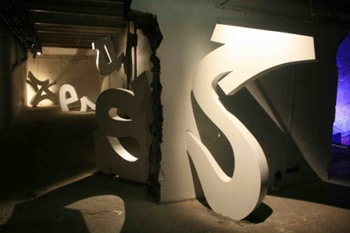
Zeus’ 3D Graffiti Sculptures
Zeus’ 3D Graffiti Sculpture At the age of fourteen the in London born Dean Zeus Colman began to work off his creativity on the streets. At that time he left, like many others, “just” tags on the streets. Who could know in the 80s that this little boy will be sixteen years later the first graffiti artists, who would exhibit in the Victoria and Albert Museum of art and design? Probably no one except his parents! ...